

 Home
Home Register
 Login
Login Album list
 Last uploads
 Last comments
 Most viewed
 Top rated
 By date
 My Favorites
 Search
Salt Lake City Mill
Location: The Salt Lake City mill site, known also as the Vitro mill site, is located south of Salt Lake City, Utah, within the metropolitan area.
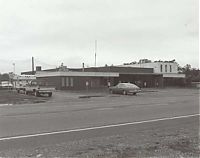
Background: In 1951, Vitro Corporation of America purchased the old Kalunite Plant that had produced alumina from Utah clays during World War II. Vitro converted the plant to a sulfuric-acid leaching process for treating uranium ore, and it became known as the Salt Lake City mill. From May 1952 to January 1964, the mill shipped uranium concentrate under three procurement contracts to the U.S. Atomic Energy Commission (AEC). The old alumina plant’s ore roasters were retained, and uranium ores with high carbonaceous content were roasted to improve the ore processing characteristics. The initial uranium milling process included acid leaching of the ore, countercurrent decantation, and precipitation of a uranous-phosphate product. During 1957, the mill was converted to a unique solvent extraction process that also permitted the recovery of small quantities of byproduct scandium. The mill’s initial capacity of about 100 tons of ore per day (TPD) was expanded several times, so that by 1957 milling capacity was 600 TPD. Over the AEC contract years, the mill processed about 1.7 million tons of ore and produced nearly 9.6 million pounds U3O8. All but a few pounds of the U3O8 product was sold to the AEC.
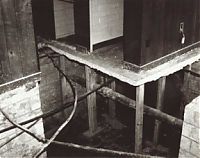
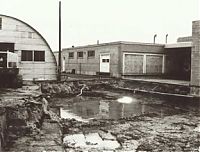
The Salt Lake City mill was operated mainly as a custom mill. Most of the ore processed was received from independent mines in southeastern Utah, though ore was also received from mines in several western states. From 1953-1958, uranium ore purchased under an AEC’s ore-buying program was stockpiled at the mill site. The AEC-purchased ore, along with ore from other AEC buying stations in the Utah region, was later sold to Vitro and processed at the mill. The uranium ore processed at the mill from 1953-1955 contained appreciable vanadium (averaging 0.7 percent V2O5), but it was not recovered during the years in which the mill supplied uranium to the AEC. When the mill was closed in 1964, the uranium ore remaining at site (about 58,000 short tons) was sold to the Atlas Corporation and transported to the latter’s mill at Moab, Utah. After uranium production was phased out, Vitro converted the Salt Lake City mill to recover vanadium by processing a waste product obtained from an elemental phosphorus production plant in Idaho. The Salt Lake City mill site was permanently closed in 1968. From its uranium ore processing, the Salt Lake City mill generated about 1.7 million tons of tailings. When the mill was closed down in 1968, the sites two piles held about 2.6 million tons of tailings material. Clean up of the mill site was begum in 1968. By 1970, the mill structures were demolished except for a 450-foot tall stack, a railroad spur, and a water tank. Radioactively contaminated soil and was excavated and shipped to other mills.
Background: In 1951, Vitro Corporation of America purchased the old Kalunite Plant that had produced alumina from Utah clays during World War II. Vitro converted the plant to a sulfuric-acid leaching process for treating uranium ore, and it became known as the Salt Lake City mill. From May 1952 to January 1964, the mill shipped uranium concentrate under three procurement contracts to the U.S. Atomic Energy Commission (AEC). The old alumina plant’s ore roasters were retained, and uranium ores with high carbonaceous content were roasted to improve the ore processing characteristics. The initial uranium milling process included acid leaching of the ore, countercurrent decantation, and precipitation of a uranous-phosphate product. During 1957, the mill was converted to a unique solvent extraction process that also permitted the recovery of small quantities of byproduct scandium. The mill’s initial capacity of about 100 tons of ore per day (TPD) was expanded several times, so that by 1957 milling capacity was 600 TPD. Over the AEC contract years, the mill processed about 1.7 million tons of ore and produced nearly 9.6 million pounds U3O8. All but a few pounds of the U3O8 product was sold to the AEC.
The Salt Lake City mill was operated mainly as a custom mill. Most of the ore processed was received from independent mines in southeastern Utah, though ore was also received from mines in several western states. From 1953-1958, uranium ore purchased under an AEC’s ore-buying program was stockpiled at the mill site. The AEC-purchased ore, along with ore from other AEC buying stations in the Utah region, was later sold to Vitro and processed at the mill. The uranium ore processed at the mill from 1953-1955 contained appreciable vanadium (averaging 0.7 percent V2O5), but it was not recovered during the years in which the mill supplied uranium to the AEC. When the mill was closed in 1964, the uranium ore remaining at site (about 58,000 short tons) was sold to the Atlas Corporation and transported to the latter’s mill at Moab, Utah. After uranium production was phased out, Vitro converted the Salt Lake City mill to recover vanadium by processing a waste product obtained from an elemental phosphorus production plant in Idaho. The Salt Lake City mill site was permanently closed in 1968. From its uranium ore processing, the Salt Lake City mill generated about 1.7 million tons of tailings. When the mill was closed down in 1968, the sites two piles held about 2.6 million tons of tailings material. Clean up of the mill site was begum in 1968. By 1970, the mill structures were demolished except for a 450-foot tall stack, a railroad spur, and a water tank. Radioactively contaminated soil and was excavated and shipped to other mills.
5 files on 1 page(s)